
On-Grid, Off-Grid, or Hybrid Solar: Which System Do You Actually Need?
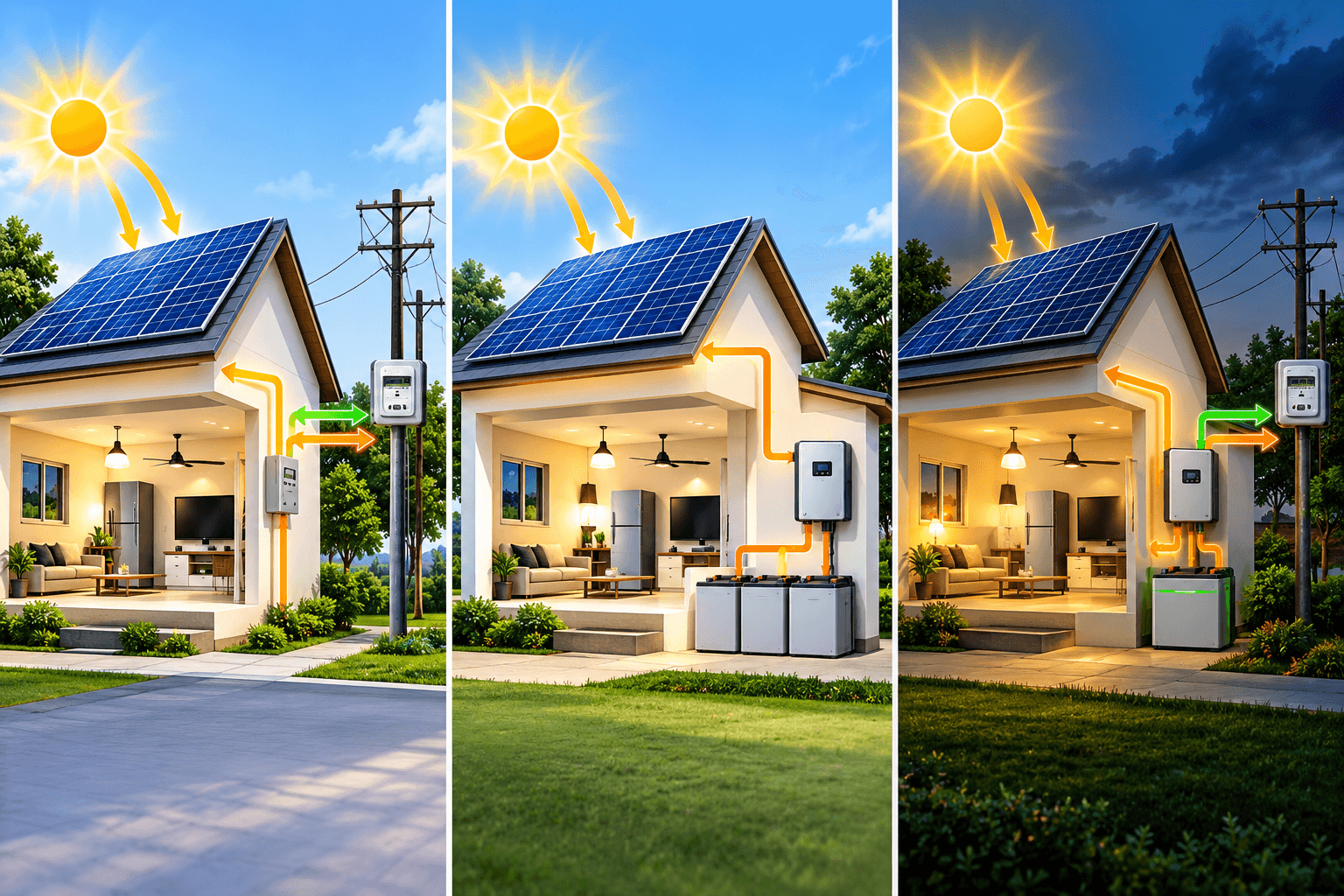
Most first-time solar buyers hear "on-grid," "off-grid," and "hybrid" in the same sales conversation without a clear sense of what actually separates them — and the right choice changes both your system cost and what happens during a power cut.
An on-grid (grid-tied) system is the most common and most affordable option. It connects directly to the DISCOM grid through a net meter, exports surplus power when you generate more than you use, and draws from the grid when you need more than you're generating. It has no battery, which keeps cost down, but it also means the system shuts off during a grid outage — a safety requirement, not a defect, so utility linemen aren't put at risk by backfeed from your panels.
An off-grid system is fully independent of the utility grid, storing all its power in batteries for use anytime, including during outages. It's the right fit for remote sites with no grid connection at all, but for most urban and semi-urban homes with a working grid connection, off-grid is unnecessarily expensive — you're paying for a full battery bank to solve a problem (grid access) you don't actually have.
A hybrid system is the middle ground: grid-tied like an on-grid system, but with a battery that keeps essential loads — lights, fans, a fridge, a WiFi router — running through a power cut, without needing the oversized battery bank an off-grid design would require.
For most homes and small businesses in Kodinar and Gir Somnath with a reasonably reliable grid connection, we recommend starting with on-grid for the best payback period, and adding hybrid battery backup only if outages are frequent enough in your area to justify the extra cost. We size every recommendation around your actual grid reliability and load pattern during the site survey, not a one-size-fits-all pitch.
Ready to see what solar could save you?
Try the Solar Calculator